Sclerotherapy vs Vein Ablation: Which Vein Treatment Is Right for You?
You might have noticed the presence of small red, blue, or purple veins on your legs. Even if they don't cause any pain, you could still be put off by their appearance.
Alternatively, you may have larger veins that feel heavy, achy, or uncomfortable following prolonged periods of standing. When you start looking into treatment options, you'll often hear the terms sclerotherapy and vein ablation.
Then, which one should you take?
It will depend on the type of vein, its size and position, the symptoms you are experiencing, and whether or not there is an existing vein disorder. Proper evaluation can then be used to determine the appropriate course of action.
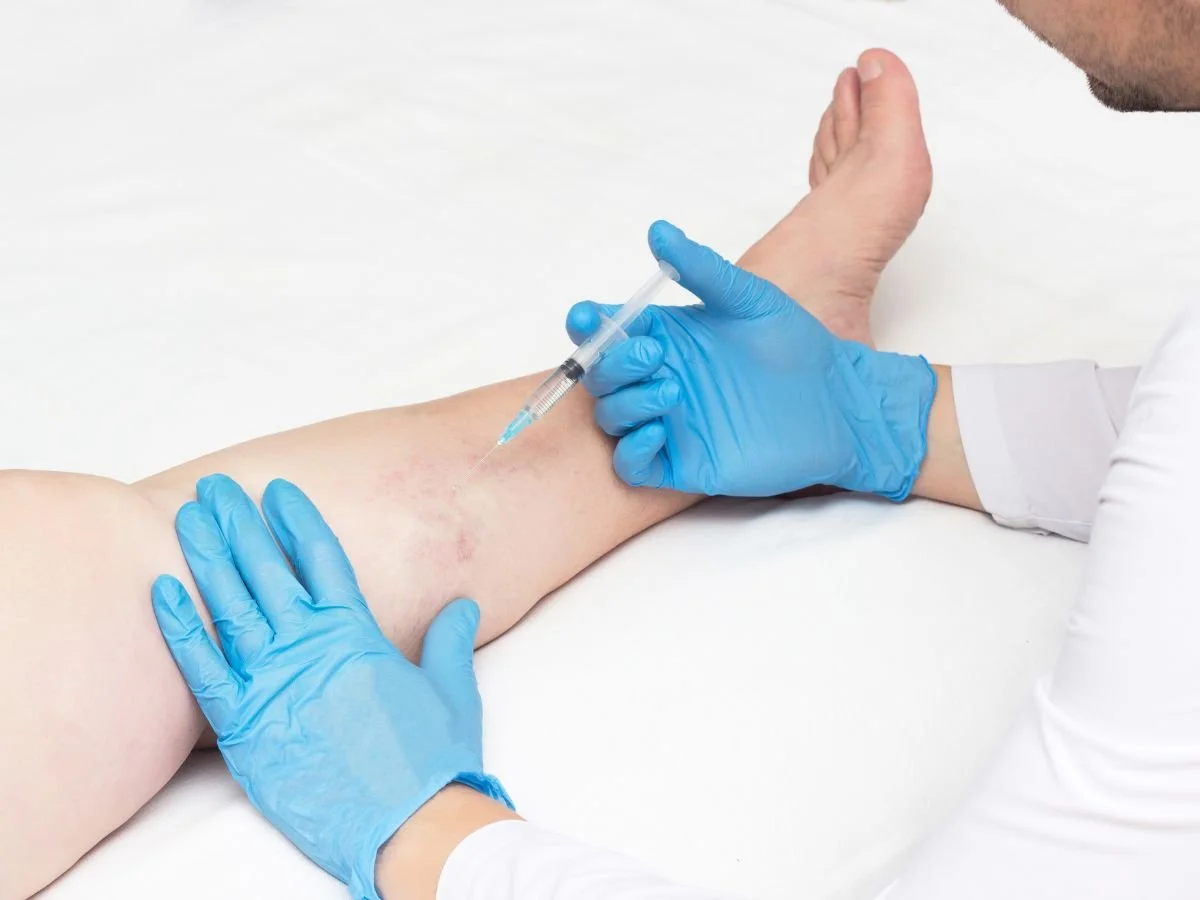
Sclerotherapy vs Vein Ablation: They Treat Different Vein Problems
Sclerotherapy is usually employed in the case of spider veins and smaller veins which are situated near the surface of the skin. A tiny needle is used to inject a substance known as a sclerosant into the vein that is to be treated.
This medication causes irritation to the walls of the vein and as a result the vein closes down. The body then slowly gets rid of the treated vein and so the vein gradually becomes less noticeable over time.
Sclerotherapy often involves more than one visit, particularly when a number of veins are to be treated. The results typically appear slowly rather than all at once.
Vein ablation functions in a different way: a thin catheter is inserted into the vein in question, usually with the help of ultrasound. According to the technique used, heat or some other method is employed to close the vein from the inside.
Ablation is generally regarded by doctors as an option when a large superficial vein has abnormally flowing blood, a condition known as venous reflux.
That difference matters. Vein ablation is not simply a stronger version of sclerotherapy. The two treatments address different vein patterns.
Sclerotherapy vs Vein Ablation: What Is the Difference?
Sclerotherapy involves injecting a solution directly into the vein. It often targets smaller visible veins, including spider and reticular veins. Recovery is generally limited, although the exact experience varies from person to person.
The procedure known as vein ablation involves the use of a catheter to close a large, problematic superficial vein. It can be considered in cases where venous reflux is responsible for the development of large varicose veins or associated symptoms.
Although recovery is usually quite short, the type of treatment and the condition of the individual vein may influence the length of recovery.
In certain instances a person will require just one kind of treatment while in other cases both can be used. The choice should be made according to an evaluation of your veins and not because of the shorter name or the more simple description.
How can you tell which treatment you might need?
You must pay close attention to what is going on around you.
Sclerotherapy could be considered if the only veins you have are small red, blue, or purple ones. With this method, individual veins can be treated without the need to treat a larger vein.
Big, bulging, or twisted veins are different; if they are accompanied by aching, heaviness, swelling, or discomfort, then an assessment for possible underlying venous reflux should be considered.
There is one other situation that is worth taking into account. When spider veins continue to appear or come back after having undergone cosmetic treatment, the visible veins may not give the full picture. Sometimes an underlying vein disorder can contribute to the development of surface veins.
In cases where both the smaller and larger veins are affected, a step-by-step treatment plan might be appropriate. For certain patients it is possible to obtain a more thorough treatment by first dealing with the basic problem and then attending to the smaller visible veins.

Can sclerotherapy and vein ablation be used together?
Yes, these treatments may be able to complement one another.
Imagining it in this way means focusing on both the source and the surface. Ablation of the vein might be used to close a larger vein that is causing the problem, after which sclerotherapy can be applied to the smaller visible veins or to the remaining tributary veins.
You can have the treatments either at separate appointments or as part of a more comprehensive treatment plan. The choice will depend on the vein pattern, the symptoms, the examination results, and whether further vascular testing is required.
That is the reason why it may not give you the answer you need if you choose a treatment before your veins have been assessed.
What takes place during a sclerotherapy appointment at Beyond Health MedSpa?
At Beyond Health MedSpa in Miami the process begins with an evaluation rather than with a one-size-fits-all treatment plan.
The provider looks at your concerns, medical history, the medications you are taking, and your treatment objectives. He or she then examines the veins to see whether they are appropriate for sclerotherapy.
If the results indicate the presence of an underlying vein condition, the provider might suggest further evaluation.
When sclerotherapy is the right procedure, we use the suitable sclerosant and injection technique to treat the chosen veins. You will also be given aftercare instructions and follow-up advice.
This tailored method ensures that the treatment is suitable for the veins in question.
What can you expect after sclerotherapy?
The usual thing for people is to ask when they can start walking, exercising, or go back to their normal routine.
Although the length of recovery differs, sclerotherapy usually requires only a small amount of time off. Your doctor will provide you with particular instructions according to the treatment you receive.
It should not be expected that all the veins will vanish right away; they usually get less noticeable after several weeks and in some cases this process may take longer. In certain instances, patients will have to have further treatments in order to get the result they want.
While treatment can improve spider veins that already exist, it cannot ensure that new ones will never appear, as factors including genetics, age, hormones, pregnancy, and prolonged standing can affect future changes to the veins.

Considering sclerotherapy in Miami?
You need not try to decide if your spider veins require treatment or which procedure would be appropriate.
A professional evaluation will enable you to find out what is causing the visible veins and will tell you whether sclerotherapy, vein ablation, another treatment, or a combination of these is suitable.
Should spider veins be causing you any trouble, it would be advisable to have an early consultation so that you can arrive at a more definite treatment plan.
Make an appointment for a vein consultation at Beyond Health MedSpa in Miami and take the first step towards having legs that look healthier.